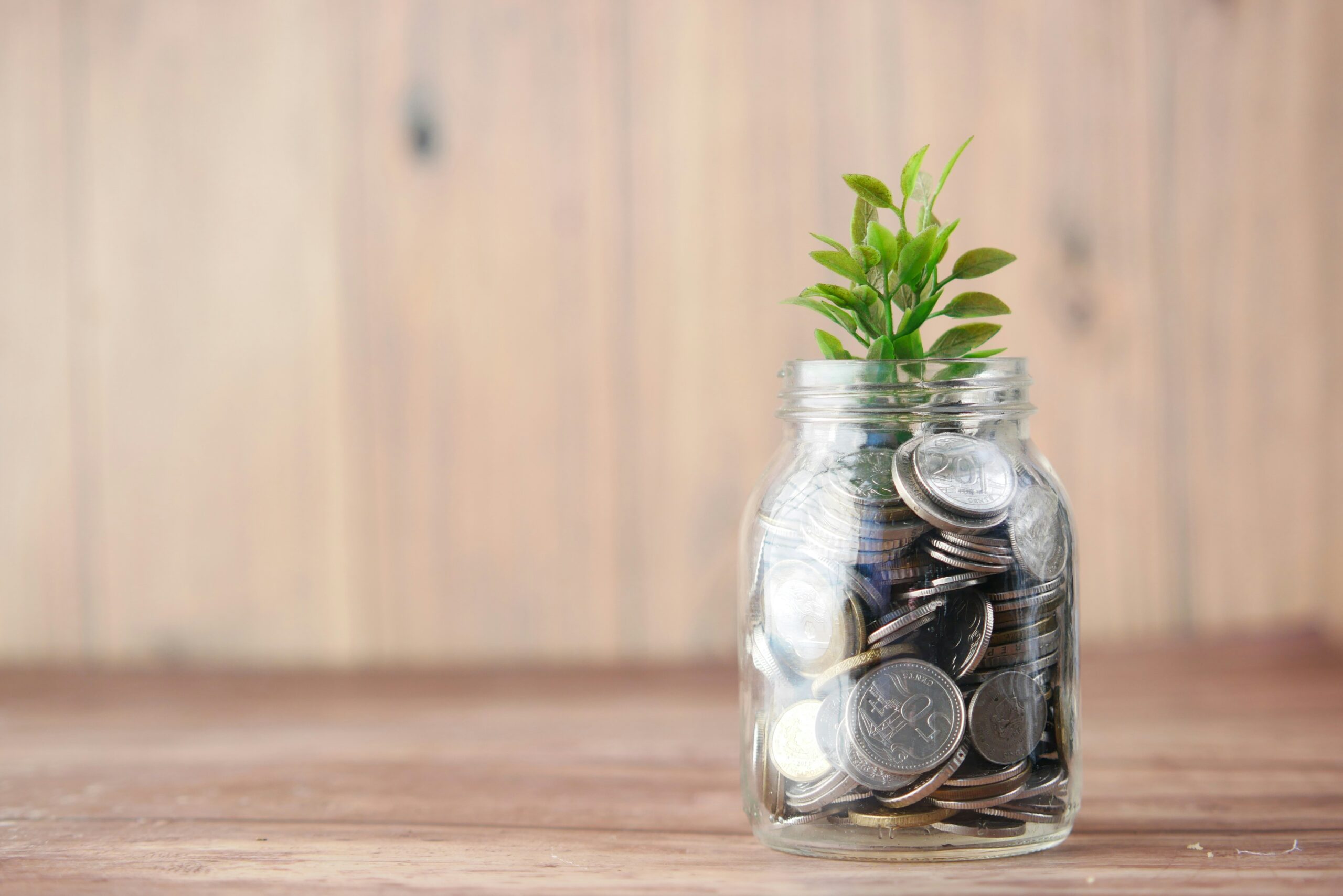
How small amounts add up over time — our 6 year investment journey with real numbers
This post may contain affiliate links. If you click and make a purchase, I may earn a small commission at no extra cost to you. I only recommend tools I genuinely use and believe in.
Table of Contents
I am not a financial advisor. Everything in this post is based on our personal experience and is for informational purposes only. Please consult a qualified financial professional before making any investment decisions.
Couple of posts ago, I wrote how we started investing $30 a month and results. Today I am going to go into actual numbers of that 6 year journey.
If you haven’t read the previous post, I am going to give you a quick recap.
Investing $30 a month felt almost laughable when I started. It was 2020, my wife and I had just gotten married and moved back to Danshui, Taiwan to continue our missionary work, and our bank account had $2000 in it. Rent was due. The income was unpredictable. And there I was, setting up an automatic transfer for thirty dollars into an index fund like it was going to change anything.
Six years later that decision is worth $23,000.
This post is not a theory. It is not a projection from a compound interest calculator. It is our actual journey. Year by year, with real numbers, honest about what is confirmed and what is approximate, showing exactly what happens when you invest small amounts monthly and consistently over a long enough period of time. If you have ever wondered whether investing $30 a month delivers real results or have wondered how much can you make investing $30 a month, I hope what follows answers that question better than any formula could.
Why we started — and why we almost didn’t
When my wife and I got married in 2020 and moved back to Taiwan to continue our missionary work, our monthly budget sat somewhere between $1,200 and $1,500 USD. We had rent, utilities, groceries, a scooter to run, two currencies to juggle, and a support-based income that didn’t always arrive on time.
Investing felt almost laughable in that context.
But I had read enough to know one thing: time in the market matters more than the amount you invest. Every month I waited was a month of compounding I was giving away for free. So I opened an investment account, set up an automatic transfer for $30 and pressed confirm before I could talk myself out of it. My wife trusted me with the investment decisions, which made the pressure of getting it right feel very real, especially in those early years when the account barely moved.
That decision, made on a missionary budget with just $2,000 in our bank account, is the reason $23,000 exists today.
The journey of investing $30 dollars a month and results— year by year with real numbers
Before I share these figures I want to be transparent about something. I only have confirmed records from 2024 onwards. The 2020 to 2023 figures are my best recollections, approximate, but honest. I’ve labeled them clearly so you know exactly what is confirmed and what is estimated.
Our portfolio has two components. A Taiwan ETF portfolio which was my foundation from 2020, and a US index fund portfolio which I added in 2023. The reasoning was simple: I didn’t want all my eggs in one basket. The Taiwan market had served me well, but concentrating everything in a single market felt like unnecessary risk. The US market is the largest and most liquid in the world, adding exposure to it was a straightforward diversification decision, not a complicated one. In 2025 I also added VT, the Vanguard Total World Stock ETF, taking that diversification one step further by adding global market exposure in a single fund.
2020 — The beginning: Taiwan: ~$1,500 | US: — | Combined: ~$1,500 (approximate)
I started with investing $30 a month into Taiwan ETFs. Low cost index funds tracking the Taiwan market. Using the same currency we lived in made it simple to manage on a tight NTD budget. By the end of the year I had approximately $1,500 in the account including our Chinese New Year red envelope money which I put straight into the investment account rather than spending.
The red envelope tradition where family gives money in red envelopes during Chinese New Year, became one of my most consistent investing boosts. Every year roughly $1,000 to $1,500 in red envelope money went directly into the investment account. Most people spend it. I invested it. Over six years that habit alone contributed significantly to where we are today.
2021 — The COVID test: Taiwan: ~$2,200 | US: — | Combined: ~$2,200 (approximate)
This was the hardest year. COVID hit markets hard and the Taiwan portfolio barely moved despite consistent monthly deposits. I had doubts. I looked at the account and wondered if I was doing the right thing. The balance had grown by only a few hundred dollars despite a full year of contributions.
I kept going anyway.
I want to pause on that because I think it is the most important sentence in this entire post. The people who build wealth through index fund investing are not the people who found the perfect strategy. They are the people who kept going when it didn’t seem to be working. 2021 was my character test. The reward shows up clearly in the years that follow.
If you want to understand why behavior matters more than strategy in investing, [The Psychology of Money] by Morgan Housel is the clearest version of that argument I’ve read. The 2021 version of me needed that book.”
2022 — Gradual momentum: Taiwan: ~$3,850 | US: — | Combined: ~$3,850 (approximate)
By 2022, I had increased my monthly contribution to around $50 and the market had recovered. The portfolio started to look more interesting. I also made a habit of directing any unallocated budget money, months where our support came in higher than expected would go straight into the investment account before it could disappear into everyday spending. My wife and I agreed on the budget together. What happened to the surplus was my call.
That habit of capturing unallocated money is one of the least talked about investing strategies and one of the most effective. It doesn’t require a higher income. It just requires the discipline to move the money before you spend it.
2023 — Adding the US market: Taiwan: ~$6,000 | US: ~$1,200 | Combined: ~$7,200 (approximate)
2023 was a significant year for two reasons. First the Taiwan portfolio crossed $6,000. A milestone that felt meaningful after three years of slow and steady growth. Second, I made a deliberate decision to add US index funds to our portfolio.
The reasoning was straightforward. I didn’t want all my eggs in one basket. The Taiwan market had been good to me, but putting everything into a single market felt like unnecessary concentration of risk. The US market is the largest in the world, diversifying into it made sense on its own merits, independent of any life plans. Adding US index funds tracking the S&P 500 and total US market was a portfolio decision first and foremost.
I started with a small amount — around $500 — and built from there. By the end of 2023 the US portfolio sat at approximately $1,200.
The combined total was approximately $7,200. Reflecting back three years prior, starting from investing $30 dollars a month and results showed genuine progress and the momentum was only beginning to build. I was starting to see a real example of compound growth.
2024 — Crossing $10,000: Taiwan: $8,319 | US: $2,300 | Combined: $10,619 (confirmed)
These figures are confirmed from my records. The Taiwan portfolio — 267,000 NTD converted at the 2024 average exchange rate of 32.098 came to approximately $8,319. The US portfolio sat at $2,300. Combined: $10,619.
Crossing $10,000 felt like a real milestone. Not because the number is large, it isn’t. But because it represented four years of consistency on a missionary budget starting from almost nothing. The first $10,000 is always the hardest. It takes the longest and feels the slowest. But it builds the foundation that everything above it sits on.
I also increased my monthly investment to $150 total. $100 into US index funds and $50 into Taiwan ETFs as my confidence in the strategy grew and our income became slightly more stable.
2025 — The year everything accelerated: Taiwan: $16,046 | US: $4,500 | Combined: $20,546 (confirmed)
This is the year that made me a believer in a way that the earlier years hadn’t quite managed. Again, when you start is more important than how much you start with.
The Taiwan portfolio — 500,170 NTD converted at the 2025 average exchange rate of 31.171, came to approximately $16,046. The US portfolio reached $4,500. Combined: $20,546.
In a single year the combined portfolio grew by nearly $10,000. To put that in perspective. It took four years to build the first $10,000. It took one year to add the next $10,000.
That is compound growth doing its work. This was a real example of compound growth. The base is larger so the growth is larger. The monthly contributions are higher so the deposits are larger. And the market, while never guaranteed, rewarded those who stayed in through 2021 and 2022 when it was hard.
I also added VT, the Vanguard Total World Stock ETF to the portfolio in 2025. A small position to start, representing my intention to hold a genuinely global portfolio as we transition to life in America. Taiwan for my roots. US for our future. The world for the long term.
2026 — Where we are today Taiwan: $18,323 | US: $5,100 | Combined: $23,423 (confirmed)
The Taiwan portfolio — 587,000 NTD at the current rate of 32.036, converts to approximately $18,323. The US portfolio sits at $5,100. Combined total: approximately $23,423.
I started with $30 a month in 2020. Six years later the account holds $23,423.
I did not earn my way to that number through a high salary. I did not make a lucky investment or time the market perfectly. I automated a small transfer every single month, invested consistently through a pandemic and market volatility, captured windfalls like red envelope money instead of spending them, and gradually increased my contributions as my confidence grew.
That is the whole strategy.
What the numbers actually show
Looking at the full journey in one table makes the compound growth curve visible in a way that individual years don’t:
| Year | Combined Total | Year on Year Growth |
| 2020 | ~$1,500 | Starting point |
| 2021 | ~$2,200 | +$700 |
| 2022 | ~$3,850 | +$1,650 |
| 2023 | ~$7,200 | +$3,350 |
| 2024 | ~$10,619 | +$3,419 |
| 2025 | ~$20,546 | +$9,927 |
| 2026 | ~$23,423 | +$2,877 (so far) |
The pattern is unmistakable. The growth in 2025 alone, nearly $10,000 in a single year exceeds the entire portfolio value from the first three years combined. That is not luck. That is what happens when a growing base, consistent contributions, and time work together.
Three key things that made the difference
Looking back across six years there are three decisions that mattered most. Not the investment strategy, not the market timing, but the habits.
Automating the transfer from day one. The money left the account before I had a chance to second guess it. I made the decision once and automated it, removing the monthly temptation to redirect the money somewhere else. My wife knew the transfer was running. Neither of us touched it.
Investing windfalls instead of spending them. Red envelope money, months with unallocated budget surplus, occasional higher income months, all of it went into the investment account first. Most people treat unexpected money as permission to spend. I treated it as an investing opportunity. Over six years that habit added thousands to the total that never would have been there otherwise.
Keeping going through 2021. The year the account barely moved. The year the market was volatile and the balance didn’t reflect the effort I was putting in. Staying the course through that year is what made every subsequent year possible. If I had stopped in 2021, which felt completely reasonable at the time. The $23,423 would not exist.
What this means for your family – 5 practical steps you can take to start investing NOW
You do not need to be in Taiwan. You do not need red envelopes. You do not need a missionary budget to apply these lessons.
What you need is a starting amount, any amount, an investment account, and an automated transfer set up for the day your income arrives.
Here is the simplest version of what I did applied to your situation:
Step 1 — Decide on an amount. Start smaller than feels meaningful. $20, $30, $50. The habit matters more than the number in year one.
Step 2 — Open a brokerage account. In the US a Roth IRA through Fidelity or Vanguard is an excellent starting point for most families. Contributions grow tax free and withdrawals in retirement are not taxed.
Here are two credible resources for more information on Roth IRAs
Step 3 — Choose a simple index fund. A total US market fund or S&P 500 fund covers the basics. If you want global diversification in one fund, VT, the Vanguard Total World Stock ETF holds the entire world market in a single ticker.
Step 4 — Automate the transfer. Set it for payday. Not what is left over at the end of the month, payday. The end of the month never has anything left.
Step 5 — Leave it alone. Check it once a year. Do not check it monthly. Do not sell when the market drops. Time is doing the work. let it.
The number that matters most
Six years ago I pressed confirm on a $30 transfer from a tiny apartment in Danshui with a few hundred in our bank account. It felt insignificant.
Today that decision is worth $23,423.
Not because I was smart. Because I was consistent.
The families who will look back in ten years wishing they had started are making that decision right now. Not the decision to invest someday. The decision to wait one more month until things feel more stable.
Things will never feel perfectly stable. The $30 transfer is the stability. Start there.
Track your own journey
To help you build the same habit I used, documenting your progress year by year. I’ve put together a free Investment Tracker in Google Sheets. It records your monthly deposits, current portfolio value, and growth over time across multiple accounts. The same tool I wish I had used from 2020. If you’ve been wondering whether investing $30 a month delivers real results, I hope this post answers that question with something better than theory.
Subscribe below to get the Investment Tracker sent straight to your inbox.
And if you want to understand the budgeting system that made investing possible on a missionary income, including how I carved out an investing category even when the budget was at its tightest. Read our budgeting post here. The exact budgeting framework we used in Taiwan
We are so glad to have you here. Don’t miss out on any future posts and free resources I will give along the way. If you are not a subscriber yet or have not yet downloaded my FREE family budget template – opt-in below!