The move that proved everything
This post may contain affiliate links. If you click and make a purchase, I may earn a small commission at no extra cost to you. I only recommend tools I genuinely use and believe in.
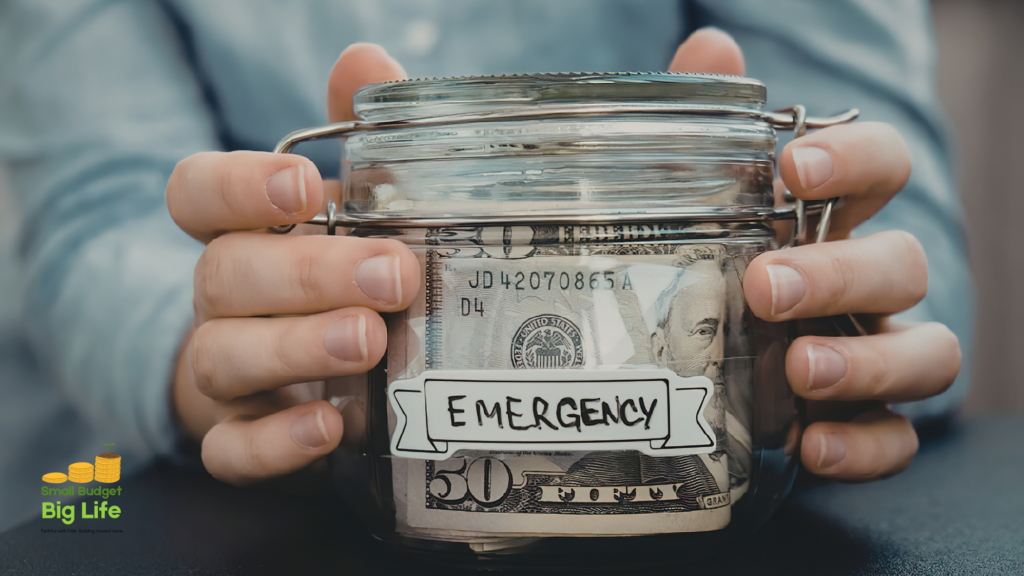
Building an emergency fund for families is not glamorous work. But definitely worth it.
In 2024 we had to move.
Not across town. From Danshui, the waterfront neighborhood where my wife and I had built our first life together as a married couple, where we had learned to budget, where our first child was born, to Taitung, my hometown on the east coast of Taiwan. A city I grew up in but had not lived in for years. New home. New set of costs we hadn’t fully anticipated.
Moving costs money. Deposits, transport, setup expenses, the hundred small things that appear when you shift your entire life from one place to another. And it all arrives at once whether you are ready or not.
Here is what I remember most clearly about that move: I was not too stressed about the money.
Not because we were wealthy, we weren’t. Not because the costs were small, they weren’t. But because we had a separate savings account sitting completely untouched that existed for exactly this kind of moment. We used it. We handled the move without panic, without debt, and without touching a single dollar of our investment account. And the moment we were settled I started rebuilding it, steady contributions back in, month by month, until it was whole again.
That was the moment the emergency fund for families stopped being a financial concept and became something I understood in my bones. It is not a backup plan. It is the foundation that makes every other financial plan possible.
The Importance of an Emergency Fund for Families and what most people get wrong
Before I tell you how we built ours I want to be honest about the three mistakes I see most often, because I have seen all three up close in people I care about.
Mistake 1, Thinking you can’t afford it. This is the most common and the most damaging. The reasoning goes: I barely have enough to cover bills and invest, where is the emergency fund money supposed to come from? The honest answer is that it comes from the same place every other financial habit comes from. You decide it is non-negotiable and you find the money. Not after everything else.
Mistake 2, Treating it as optional. Some people know they should have one but treat it as something to build after they have sorted out everything else. There is always something else. The emergency fund keeps getting pushed back and then the emergency arrives before the fund does. That is not a hypothetical, it is the most predictable financial mistake a person can make.
Mistake 3, Keeping it where it can be spent. If your emergency fund lives in the same account as your everyday money it will get spent on non-emergencies. Not because you are irresponsible, because it is human nature to spend available money. The physical separation is not a technicality. It is what makes the system work.
Why the emergency fund protects everything else
Here is the insight that changed how I think about this, and it is the reason this post exists.
Most people frame an emergency fund as protection against hardship. Something to fall back on when things go wrong. That framing is correct but incomplete.
The deeper truth is this: an emergency fund is protection for your system.
Think about what happens when an unexpected expense hits a family with no emergency fund. The first thing that goes is the investment transfer. The automatic savings contribution stops. The budget gets blown apart trying to find money from somewhere. Debt appears. Panic sets in. And the financial habits that were quietly building wealth in the background, the ones that compound over time, the ones that took months to establish, get broken in a single week.
Breaking the habit is often harder to recover from than the financial loss itself.
I kept investing through COVID. Through late support payments. Through the months when the exchange rate hurt us. Through the birth of our first child. Through the move from Danshui to Taitung. The investment transfer ran every single month for six years without stopping, not because those months were easy, but because the emergency fund meant I never had to choose between the investment and the crisis.
That is what the emergency fund actually does. It does not just protect your money. It protects the behavior that builds money over time.
Three things it gave us day to day:
Peace. We stopped worrying about what might go wrong. Not because nothing could go wrong, plenty did, but because we knew the system could absorb it.
Protection. The investment transfer was untouchable. Not because of willpower but because the emergency fund existed to handle what the investment account should never have to.
Debt prevention. Every unexpected expense that came our way was handled with cash we had already set aside. In six years of missionary life in Taiwan we never went into debt for an emergency. Not once.
How we built ours — the honest version
We started building our emergency fund from day one. Not after we had sorted out the budget. Not after we started investing. From the very beginning, because we had a tight income and a support-based salary that varied month to month and no safety net of any kind. The tight budget was the reason we built it first, not the reason we couldn’t.
Our method was simple:
A fixed amount went into a completely separate savings account every month, no exceptions. That account was not visible in our day to day banking. Out of sight helped keep it out of mind. Then anything left over at the end of the month, after bills, after the investment transfer, after everything, went in too instead of being spent on something nice.
That last part was the hardest. Not the fixed contribution, we automated that and it ran without decision making. The hard part was the leftover. When the month ended with NT$2,000 unspent the easy choice was a nice meal out or something small we had been wanting. The disciplined choice was moving it into the emergency account before we made any plans for it.
We chose the disciplined option more often than not. Not always. But more often than not.
Our target was six months of expenses. On a missionary income where support varied month to month, three months felt too exposed. Six months gave us a cushion that could absorb a genuinely difficult season, a sustained drop in support, an extended medical situation, a major life transition, without forcing us to dismantle everything we had built.
The move — what it actually felt like to use it
When we touched the emergency fund during the move from Danshui to Taitung in 2024 I felt three things simultaneously.
Relief, because we handled it without panic. The money was there when we needed it and we used it without guilt or hesitation. That is exactly what it was for.
Gratitude, because past discipline was paying off in a real moment. The months we chose the emergency account over the nice dinner were sitting in that fund waiting for us. Delayed gratification made tangible.
Motivation, because it proved the system worked. Seeing the fund do its job made me want to rebuild it faster than I had built it the first time. We made steady contributions back over the following months until it was whole again. The habit of rebuilding felt just as natural as the habit of building had.
Looking back I would not change anything about how we handled it. The system worked exactly as intended. That is the best thing you can say about any financial decision.
What I wish someone had told me
Two things, both practical, both simple.
Start smaller than you think you need to. The psychological barrier to starting an emergency fund is often the size of the goal. Six months of expenses sounds overwhelming when you are starting from zero. Start with one month. Then two. Then three. The target matters less than the habit of moving money into that account every single month without touching it. NT$1,000 in a separate account is infinitely more useful than NT$0 because you haven’t started yet.
Never keep it somewhere easy to access for spending. This is not about distrust, it is about design. The emergency fund should require a deliberate decision to access. A separate bank if possible. At minimum a separate account with no debit card attached. The friction is the feature. When the money is slightly inconvenient to reach you will only reach for it when it is genuinely necessary.
Start both — never let one wait for the other
Here is the question I get most often in some form: should I build my emergency fund first or start investing?
My answer, shaped by six years of doing both on a missionary income, is this:
Start both simultaneously. Never let one wait for the other.
The emergency fund and the investment account serve completely different purposes and they do not compete for the same job. The emergency fund protects the present. The investment account builds the future. You need both. Waiting to invest until your emergency fund is complete means losing months or years of compound growth. Investing without an emergency fund means one unexpected expense breaks the whole system.
The practical version of this looks like: every month a fixed amount goes to the emergency fund and a fixed amount goes to the investment account, both automated, both non-negotiable, both treated as bills not as optional extras. The amounts can be small. The consistency is everything.
Keep the two buckets completely separate and never let one drain the other. That is the rule. It is simple. It is not always easy. But it works.
America raises the stakes
Everything I have described above applies anywhere. But as I prepare to move to America for the first time I am thinking about emergency funds differently than I ever have before.
In Taiwan I had six years of familiarity. I knew the healthcare system. I knew roughly what emergencies cost. I had a community around me. I understood the rhythms of life well enough to predict what might go wrong and roughly what it might cost.
In America I have none of that yet.
No established financial network. No health insurance history. No credit history. No sense yet of what an unexpected expense actually costs in a country where medical bills can arrive in amounts that would be unthinkable in Taiwan. I am arriving as a financial outsider in a system I have studied but never lived inside.
The emergency fund is not just important in this context. It is the single most critical financial decision we make before we land.
Three to six months of American expenses, not Taiwan expenses, sitting in a completely separate account before we make any other financial moves. Before we increase investment contributions. Before we open a Roth IRA. Before anything. The foundation first. Always the foundation first.
The one thing
If you are reading this and you do not have an emergency fund yet, or you have one that is too small, or one that is sitting in the same account as your spending money, I want to say one thing clearly:
You cannot build wealth consistently without one. It is that simple.
Not because emergencies are inevitable, though they often are. But because the financial habits that build wealth over time are fragile in their early stages. They need protection. They need a buffer between them and the chaos of real life. The emergency fund is that buffer.
Start today. Start small. Automate it. Keep it separate. And start investing at the same time, never let one wait for the other.
The system works. I know because I lived it for six years, from Danshui to Taitung, and it carried us through a pandemic, a move, the birth of a child, and now the biggest transition of our lives.
Build the foundation. Everything else sits on top of it.
Track your emergency fund progress
To help you build your emergency fund with the same discipline we used in Taiwan I’ve created a free Emergency Fund Tracker, a simple one page Google Sheet that shows your progress from zero to your target amount. Visual, motivating, and takes two minutes to set up.
Download the free Emergency Fund Tracker, HERE
And if you want to understand the full budgeting system that made both the emergency fund and the investment account possible on a missionary income, start here. the exact budgeting framework we used in Taiwan