What 6 years as a Missionary in Taiwan Taught Me About Money (that most Americans never learn)
This post may contain affiliate links. If you click and make a purchase, I may earn a small commission at no extra cost to you. I only recommend tools I genuinely use and believe in.
Table of Contents
I hate to title this first post as “Missionary Money Lessons.” But it is where our story began and it is the truth that our time as missionaries shaped our entire paradigm of money and views on finances.
I still remember sitting in our tiny apartment in Danshui, Taipei staring at our bank account on a cold January morning in 2020. My wife and I had just gotten married. We had moved back to the country I grew up in, her first time living in Taiwan, my first time coming home as a husband. And our account balance was sitting just under $2000. Rent was due. Neither of us had a stable income yet. No family nearby, no credit card buffer, no fallback plan. Just the two of us, a spreadsheet, and the quiet understanding that we had to make this work.
For her, everything was new. The language, the food, the rhythm of life in a Taiwanese city. For me, the city was familiar but the responsibility wasn’t. I was no longer just figuring out my own finances. I was figuring out ours. That shift, from my money to our money, it changed the way I think about everything.
Two years later our first child arrived and changed it again. We had to learn to family budget on one income. And now, six years on, with a three year old running around and a newborn, we are soon packing our bags and moving to America and me for the very first time. These “missionary money lessons” aren’t something you’ll find in any personal finance book. It’s what you learn when you genuinely cannot afford to get it wrong.
Why we went, and what we knew we were signing up for
I grew up in Taiwan. I know which night markets are worth the detour, which convenience stores have the best hot food at midnight, and how to argue a price at the wet market without causing a scene. So when my wife and I got married in the States and moved back to Taipei for our missionary work, I wasn’t navigating an unknown country. I was coming home. Just with a very different life than the one I’d left.
We met at Bible school. Two people who had each chosen a life of missions before we ever chose each other. We both knew the reality of support-based income: the unpredictability, the tight budget months, the faith required when the numbers didn’t add up. What we hadn’t done before was share a bank account.
For her, Taiwan was a new frontier, the language barrier, the scooter traffic, the squatty potties. For me, it was familiar ground. But managing money together as a newly married couple was new territory for both of us. Suddenly it wasn’t my budget or her budget. It was ours. Two different spending styles, one shared account, and not much margin for disagreement.
The financial pressure didn’t just test our budget. It tested our communication and our priorities. And somewhere in that tension, we started learning things about money that you simply can’t learn any other way.
Support-based income means depending on the generosity of others to cover your living costs. No salary, no guaranteed direct deposit, no employer to fall back on. We chose it anyway, not because we were reckless, but because we had a peace that was bigger than the uncertainty. What we didn’t anticipate was how much it would teach us. Not just about money, but about each other. When you can’t overspend, you don’t. When there’s no credit card to bail you out, you get creative. The financial constraints of missionary life didn’t hold us back. They quietly built us into people who actually know how to handle money together. And that’s what I want to pass on.
What “living on almost nothing” or a tight budget actually looked like
Let me paint you a picture of a typical month in Danshui.
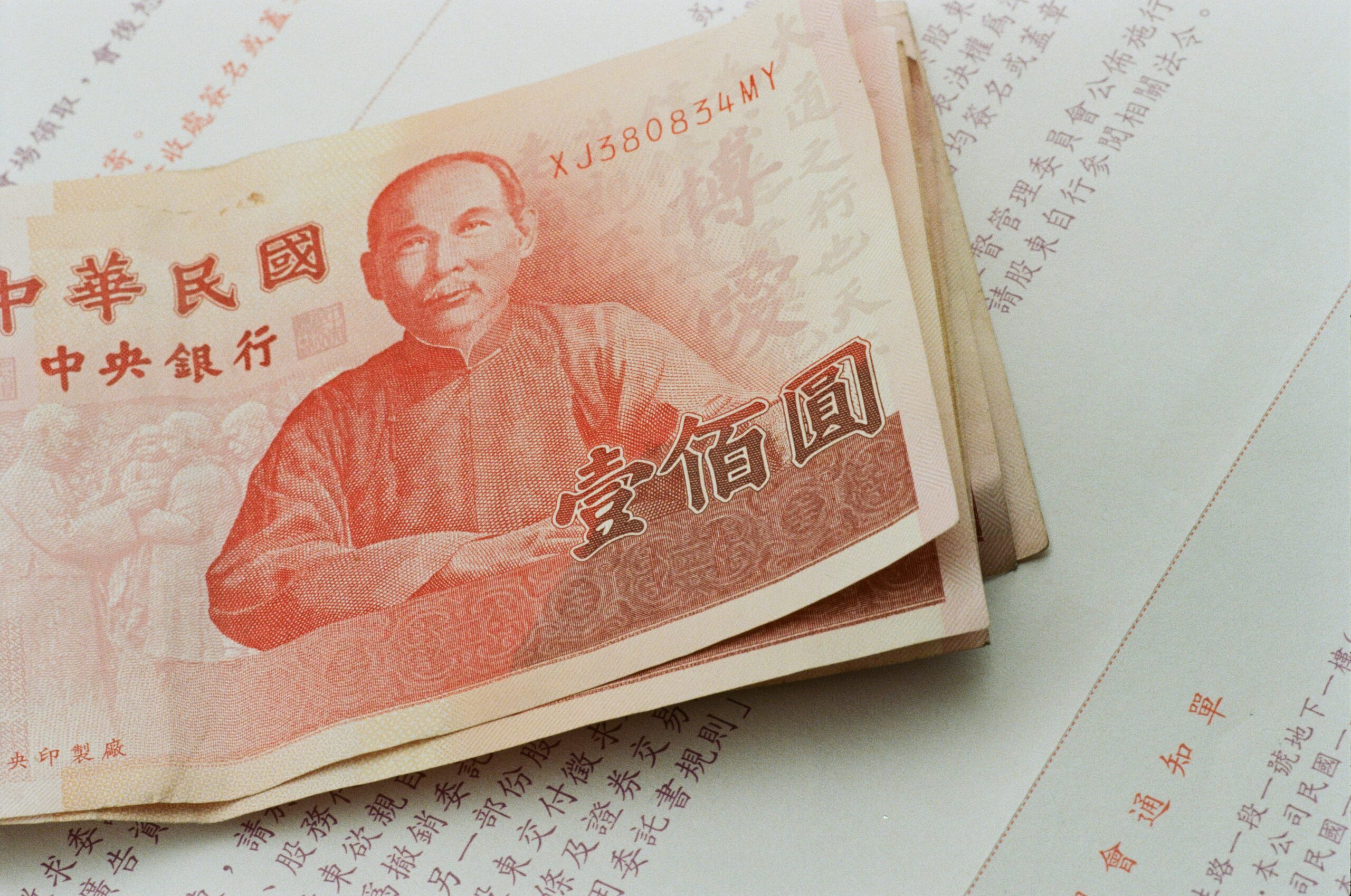
For the first couple of years, our total budget was somewhere between $1,200 and $1,500 USD (and never exceeded $2,000) and that had to cover everything. Rent, utilities, food, transport, phone bills, and whatever surprise the month decided to throw at us. In Taiwan’s New Taiwan Dollar, that’s roughly NT$37,000 to NT$45,000. Sounds like a lot until you realize you’re mentally converting every single purchase twice. Once to make sure you have enough NTD in your wallet, and again to make sure the USD support coming in that month would actually cover it. The exchange rate wasn’t always kind. Some months we’d lose NT$2,000 just in the conversion. That adds up fast when your margin is already razor thin.
Food was where we got creative. Danshui has a famous night market strip along the waterfront. Stinky tofu, grilled corn, oyster noodles, scallion pancakes. And on a tight budget week, a full meal for two could cost less than NT$150. We leaned into that. But we couldn’t eat out every night, so we cooked at home most of the time, shopping at the traditional wet market down the road where vegetables were cheap, fresh, and sold by grandmothers who had been there longer than the buildings around them. The reality is that a full and satisfying meal doesn’t have to cost much at all.
The hardest part wasn’t the small budget or even budgeting on one income. It was the unpredictability. Support-based income doesn’t arrive on the first of the month like a paycheck. Sometimes it came in early. Sometimes it trickled in across three different weeks. We learned to keep a running mental tally at all times. What’s in the NTD account, what’s still coming in USD, what bills are due, and what we could afford to spend today without gambling on tomorrow. There was no app that fully solved this for us. It came down to knowing our numbers cold, every single day.
Most people don’t live that close to the edge by choice. We did. And somewhere in that tension, between what we had and what we needed, we started learning things about money that you simply cannot learn any other way.
The 6 missionary money lessons 6 years in Taiwan forced us to learn
Okay, maybe not all these points will be all that shocking to you, but these are the lessons I learned through living it out and not by reading in a book. They’re lessons that showed up at our kitchen table in Danshui, in our bank statements, in the quiet conversations my wife and I had about what we could and couldn’t afford that month. Each one came slowly. Not as a sudden revelation, but as a habit that formed under pressure.
Money Lesson 1: You need far less than you think
America is very good at convincing you that comfort requires a certain income level. Taiwan quietly dismantled that idea for us. We lived full, meaningful, genuinely happy months on budgets that most American families would consider impossible. We had enough food, a roof over our heads, a working scooter, and each other. Once you strip away the noise of what you’re supposed to want, you realize how little of it you actually miss.
Money Lesson 2: Wants and needs are not as close as you think
When your budget is $1,200 a month and rent alone takes a third of it, the line between want and need stops being philosophical. It becomes a Tuesday afternoon decision at the convenience store. Do we grab the good coffee or the instant pack? Do we take the MRT or walk the 25 minutes? Over time, making those small calls daily builds a certain financial muscle. You stop feeling deprived by saying no. You start feeling sharp. In control. That muscle, built in Taiwan, will still work the same way when we get back in America.
Money Lesson 3: An emergency fund isn’t a luxury — it’s the whole game
This one took us a little while to learn.
Early on, when money came in, our instinct was to breathe easy and spend a little more loosely. Then an unexpected expense would arrive, a medical visit, a broken appliance, a month where support came in late. And we’d feel that familiar stomach-drop. So we made a decision: no matter how little came in, we would set something aside. Even NT$1,000 (roughly 20 USD). The amount wasn’t the point. The habit was. The month we realized we had a small cushion sitting untouched in our account was the first month Taiwan stopped feeling financially terrifying. That cushion changed everything. Not because it was large, but because it existed.
Money Lesson 4: Contentment is a practice, not a personality trait
Some people talk about contentment like it’s something you either have or you don’t. A temperament, a gift. We learned it’s neither. It’s a daily decision. In Taiwan, we were surrounded by a culture that, in many ways, finds genuine satisfaction in simplicity. A bowl of beef noodle soup eaten in a cramped restaurant. A slow evening walk along the Danshui River. A Sunday morning that costs nothing. Contentment wasn’t something we found — it was something we practiced, imperfectly, over six years. And the more we practiced it, the less power money — or the lack of it — had over our peace.
Money Lesson 5: Budgeting isn’t a restriction — it’s the thing that sets you free
Before Taiwan, I think I associated budgets with limitations. With saying no. With a kind of financial white-knuckling. What I learned is that a budget isn’t a cage, it’s a map.
When every dollar has a job before the month begins, you stop wondering where it all went. You stop the low-grade anxiety of not quite knowing if you’re okay. In Danshui, our budget was the thing that let me sleep at night. It wasn’t perfect. Some months we blew a category and had to shuffle things around. But we always knew where we stood. That clarity, on $1,200 a month in a foreign country, taught me that budgeting isn’t about how much you have. It’s about being honest with what you have and deciding with intentionality and purpose what to do with it.
If you want to see the exact budgeting framework we used, I walk through it step by step in this post. “Our One Income Family Budget System”
Money Lesson 6: You don’t have to be rich to start investing. You just have to start.
Finally, this one surprised us most of all, and honestly, it might be the decision I’m most proud of.
In 2020, the same year we got married and moved to Danshui with almost nothing, we started investing. I want to be clear about what that looked like: it wasn’t impressive. Some months it was the equivalent of $30 or $50 USD. There were months it felt almost laughable setting money aside for some distant future when the present felt so tight. But I made a decision on the front end: no matter what came in that month, something was going into the investment account first. Not what was left over. First. My wife trusted me with that call and I took it seriously.
That was six years ago. And the numbers today look nothing like what we put in.
Not because we invested large amounts. We never did. But because of something that works quietly in the background whether you’re paying attention or not: compound growth. The money we set aside in those early, scrappy Taiwan years didn’t just sit there. It grew. And then it grew on its growth. Month after month, year after year, until one day we looked at the total and genuinely didn’t recognize it as money that had started out as small deposits from a missionary budget in Danshui.
Here’s what strikes me most about it now: we started in the same month we were staring at a $2000 bank balance. We were newlyweds with no stable income and we still started. That’s the only reason six years of growth exists today. Not because we were financially comfortable. Because we started anyway.
The lesson isn’t “invest when you’re ready.” You’ll wait forever to be ready. The lesson is that time is the one advantage every young family actually has “right now”. And every month you wait is a month of growth you’re giving away for free.
I share the full story, including the real numbers. Right here. “How we started investing on $30 a month.”
What we’re doing differently now — heading to America for the first time
What most people also don’t expect is that we did all of this, the tight budget, the consistent investing, the emergency fund discipline through a pregnancy and the first three years of raising a child. Our first child was born in 2022, two years into our life in Danshui. The budget didn’t get easier. The investing didn’t pause. We just adjusted the categories, tightened where we could, and kept the system running. Now with a newborn alongside our three year old, we are carrying those same habits into a country with a completely different cost of living. The stakes have never felt higher. Neither has our confidence in the system.
My wife lived in America. She grew up there, went to school there, and knows how it works. But for me, America is the unknown. I’m the one who will be figuring out how to open a bank account from scratch, build a credit history that doesn’t exist yet, navigate health insurance for the first time, understand a tax system I’ve never filed under, and learn how a country that runs on cars works when you’ve spent your whole life on scooters more than cars. The roles are reversed now. She’s the local, and I’m the one learning which bus to take.
I’d be lying if I said that doesn’t feel daunting. It does. Taiwan made sense to me in a way that went beyond familiarity. I understood the rhythms of it, the unwritten rules, the way things work. America is a different operating system entirely, and I’m installing it from scratch at an age when most Americans already have a decade of financial habits built in.
But here’s what I keep coming back to: I’ve done hard financial things before. We both have. We built a life on budgeting on one income of about $1,200 a month in Danshui with no safety net and came out the other side with savings, investments, and habits that actually work. That didn’t happen because conditions were easy. It happened because we had a system, and we stuck to it.
So the plan for America is the same one that worked in Taiwan. Start with the foundation. Before anything else, we’re building a bigger emergency fund. Three to six months of expenses, untouched, before we make any other moves. No investing upgrades, no lifestyle upgrades, no “we deserve this after ten years as volunteer missionaries.” Just the foundation, built first, in a country I’m learning to navigate one step at a time.
I’ll be writing about all of it. The wins, the confusing parts, the moments where the American financial system makes absolutely no sense to someone who didn’t grow up in it. If you’re an immigrant, or married to one, some in financial transition, or just someone who has ever felt like a financial outsider trying to figure it out. This blog is for you too.
You’re not alone in this
If you’ve read this far, I’m guessing money feels heavy for you sometimes. Maybe you’re stretching a single income further than it was designed to go. Maybe you’re staring at your account balance the same way I started at ours on that January morning in Danshui, trying to do the math one more time and hoping it comes out differently.
It doesn’t have to stay that way. Not because the money magically appears, but because the way you manage what you have can genuinely change everything and that part is learnable. I know, because we learned it with almost nothing, in a city I grew up in, with no fallback plan and no room for error.
If you want a simple starting point, I put together a free Family Budget Template. The same basic framework we used in Taiwan. It takes about 20 to 30 minutes to fill in and it will show you exactly where your money is going. Drop your email below and I’ll send it straight to you.
More honest money conversations coming every week. Glad you’re here.